
AI Development Tool Adoption
Notes from the field

AI tools are transforming software development. Over the past 6 months I’ve been an advocate for the use of AI developer tooling within our company. In this post I share what I’ve learned scaling adoption of AI tooling.
Remove blockers to access
Make it as easy as possible for engineers to get access to AI tools. We did this by selecting a “default” tool. We created a working group of motivated early adopters. They tested and explored tools then selected a default which works well for us now. Once we had a default tool we worked to ensure everyone who needed it had access. We provided guidance and training on how to get started with the tool in our environment.
Sponsor and encourage experiments
Once folks have access only a small percentage will go on to use the tools regularly. There are a variety of reasons for this. Change is hard, often folks have a workflow they enjoy and don’t want to change. Many folks are afraid of the impact AI is having on our jobs as software developers. Many have a lack of understanding about the capability of these tools and where they are helpful. To break through these barriers I sponsored and encouraged experiments.
In one case we needed to stand up infrastructure in a new region urgently. A small team of developers from across our organisation came together to work on this. We took this as an opportunity to experiment with AI tools. We agreed that experiment data would be anonymised and used only to educate the wider team on AI tools. Explicitly the data wasn’t used for other purposes e.g. performance reviews. Over 4 weeks we met 3 times, asking ourselves the same 3 questions:
Do you expect the new tool to speed up your work?
Do you expect you will enjoy using the new tool?
What tasks do you expect the new tool is helpful for?
The results from the start of the project and the end of the project were not what I expected. Folks felt that the AI tool did speed up their work, but not as much as they had anticipated. They enjoyed using it a lot more than what they expected they would with all wanting to continue use. The third question is where the gold was. We had engaging conversations sharing experiences where AI helped and where AI was a real hinderance. This shared learning was contextual to our environment and code base. We shared these results as part of our effort to spark interest and ongoing discussion.
Foster a community
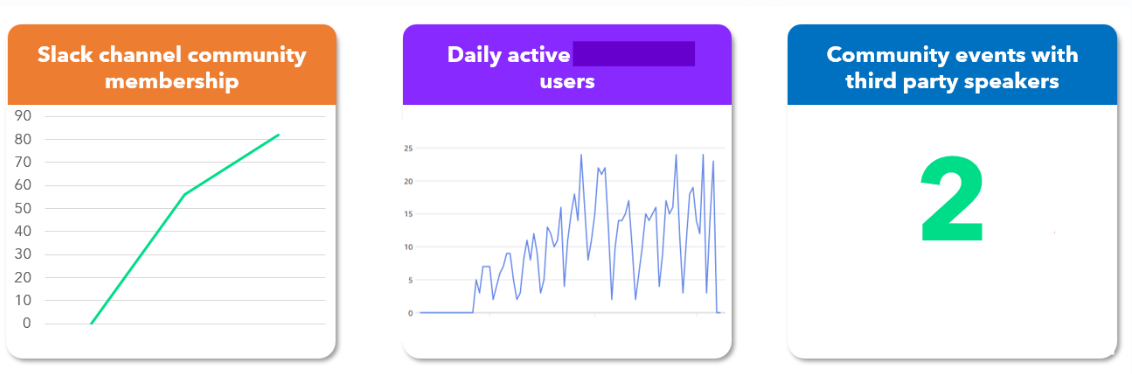
We started a slack group as we were selecting our default tool which grew as we scaled adoption. The early adopters prioritised fostering this community by posting thoughts and sharing experiences. They made time to help others get started. Over time the discussions flourished with contributions from a wide and varied group. People began to experiment themselves and share their learnings. Our own internal best practices started to emerge.
Find what works in your context
Your engineering system and tech stack will be unique, AI will amplify both what works well and what doesn’t. One of our larger applications uses a large bespoke framework. This framework prevented utilisation of code generation AI tools in 2024. In H2 2025 we found success with a new generation of models and tool configuration. One of our principal engineers found that the tool could be taught the nuances of our frameworks. We developed AGENTS.md style files we which described how to work in our application. This unlocked usage of the tool for a significant group of developers.
Educate the wider organisation
Once our adoption started to scale up I spent time informing and educating the wider company. I shared the tools we were using, our progress and how we were thinking about and measuring success. This helped me to get in front of the narrative about AI. I shared both what was working and where we were finding that AI wasn’t particularly helpful. This balanced narrative helped to taper some of the outsized expectations from bold claims folks read online.
During our early phase when our focus on was on adoption I shared anecdotes and outcomes along with a dashboard of key metrics1.
The pace of change with AI tooling is so fast that it’s natural to feel that you are falling behind. What is familiar though is how to approach change. I’ve found success with focusing on people and understanding what they need to successfully and sustainably change2.
The DX AI Measurement Framework was helpful here